
Engine maker Unity hasn't been shy about throwing its weight behind generative AI tools in a purported bid to help its users boost discoverability, generate advertising revenue, and accelerate product innovation The tech has also allowed Unity to publicly embarrass itself on at least one occasion.
Still, Unity remains committed to the divisive technology and has now suggested its AI offering will soon be capable of prompting entire video games into being.
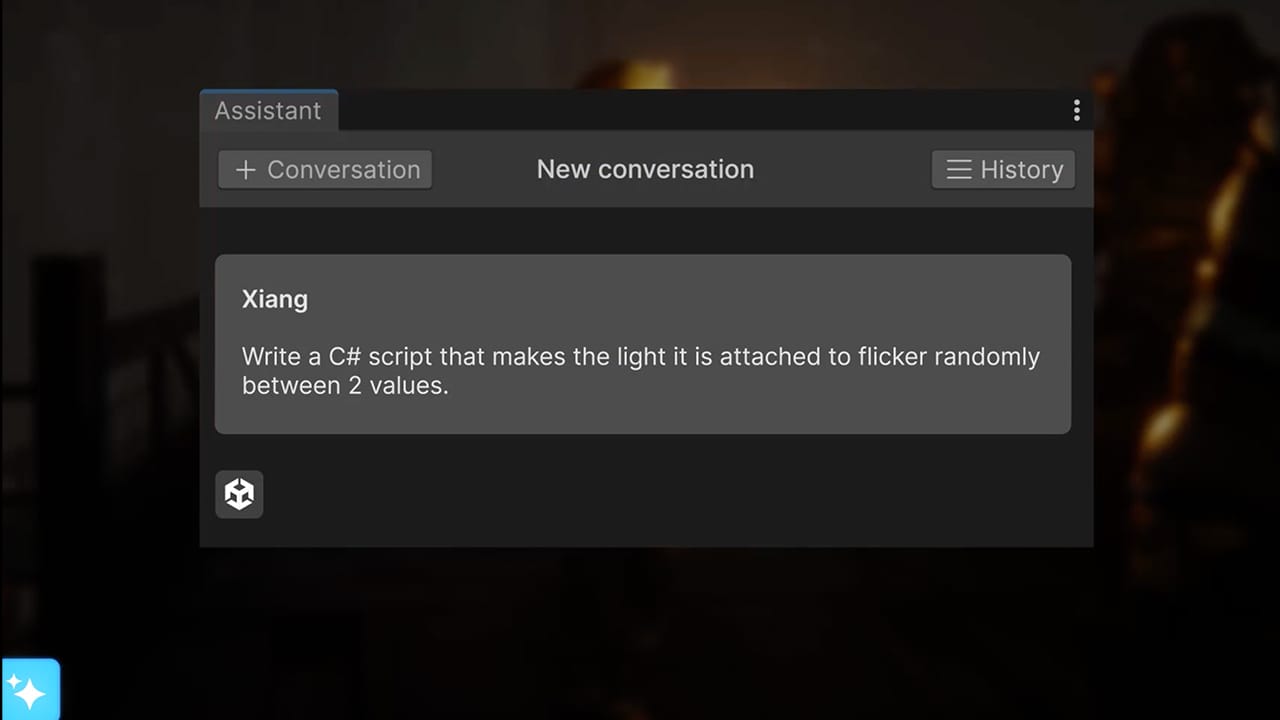
Discussing the state of the company's AI business on a recent earnings call, Unity CEO Matthew Bromberg said the company is preparing to unveil a new Unity AI beta at GDC Festival of Gaming in March that will negate the need for coding.
"AI-driven authoring is our second major area of focus for 2026," said Bromberg. "At the Game Developer Conference in March, we'll be unveiling a beta of the new upgraded Unity AI, which will enable developers to prompt full casual games into existence with natural language only, native to our platform—so it's simple to move from prototype to finished product."
"This assistant will be powered by our unique understanding of the project context and our runtime, while leveraging the best frontier models that exist. We believe together this combination will provide more efficient, more effective results to game developers than general-purpose models alone."
Bromberg claimed Unity AI will "democratize" game development for non-coders while raising productivity for all users.
"Our goal is to remove as much friction from the creative process as possible, becoming the universal bridge between the first spark of creativity and a successful, scalable, and enduring digital experience," he continued.
During the Q&A portion of the earnings call, Bromberg suggested there will eventually be "tens of millions of more people creating interactive entertainment" driven by AI-enabled development tools, and emphasized that Unity intends to lead the charge in that regard.
As noted in a legal explainer, the Unity AI assistant currently uses large language models from OpenAI and Meta (GPT and Llama, respectively) to answer user questions, generate code, and run agentic actions.
Unity AI generators leverage several first-party and partner models to produce and refine assets—with those partners including Scenario (trained on Stable Diffusion, FLUX, Bria, and GPT-Image foundation models) and Layer AI (based on Stable Diffusion and FLUX foundation models).
Read more about:
Unity