
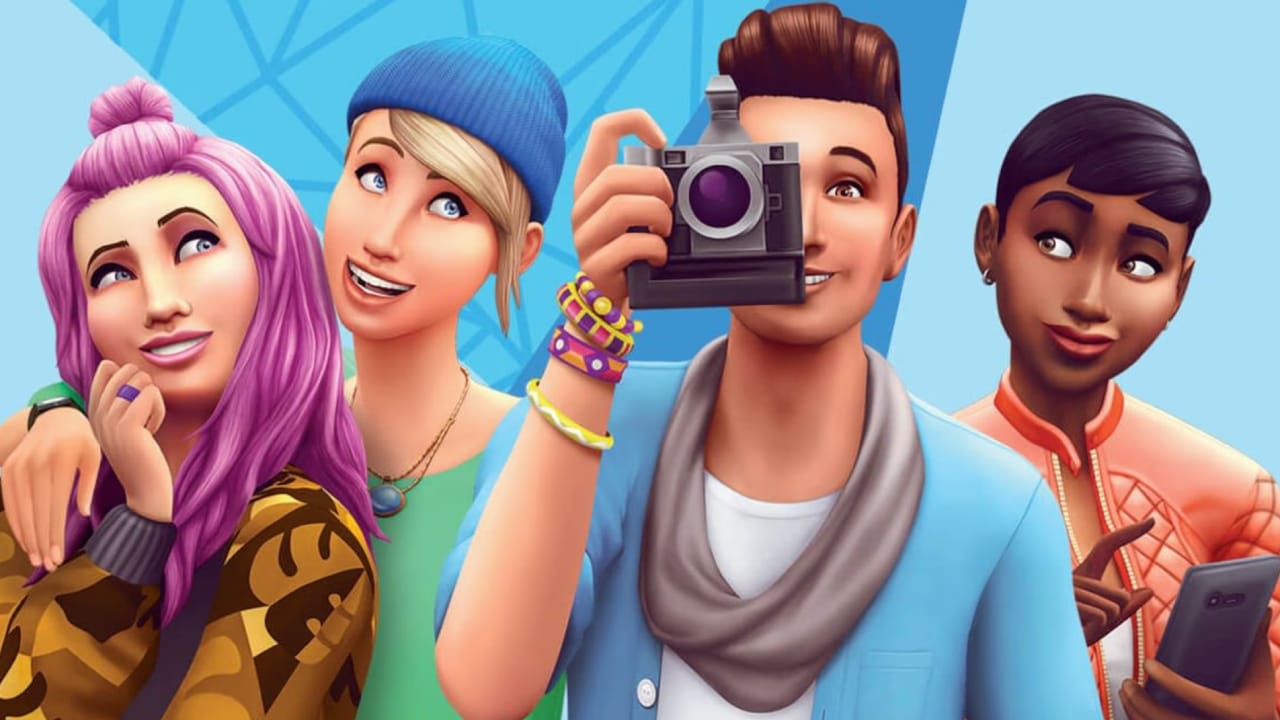
The Sims 4 has had a robust modding community for as long as it's existed. The life simulation franchise lets players build whatever life they'd like. The flexibility and freedom is a huge part of the draw. Electronic Arts has provided the framework, and the modding community expanded on it; built on top of the game, modders have added everything from more skin tones and hairstyles to nudity and sex positions. Electronic Arts has, in some ways, supported its creators, but has never officially allowed modders to charge for their creations. Modders get around that by setting up Patreon or other subscription services allowing players early access to mods, where people can support with monthly payments instead of directly for content.
The Sims 4 Marketplace and its associated The Sims Maker Program are the first official ways for players to buy custom content for the game—not mods that change the game's scripting, but new items and cosmetics. But not all The Sims 4 creators are happy.
Announced on March 3, The Sims 4 Marketplace is disappointing to much of the community because of several key decisions—specifically, because Electronic Arts is introducing a new currency, called Moola, necessary for purchasing stuff on the marketplace and taking a 70 percent cut of every purchase.
User-generated content is big business; UGC games and platforms like Roblox are among the most successful in the industry. Electronic Arts, it seems, wants a bite of that. The marketplace is the first time The Sims 4's console players will have access to custom content, but some of the program's problems are hard to overlook for creators.
"I personally find the Marketplace to be an ugly combination of enforced microtransactions, extraction of talent from the creators of The Sims, and perpetuation of the community’s dependence on a constant stream of content," The Sims 4 CC creator myshunosun told Game Developer. "I see this as another way for EA to monetize downloadable content. In this case, creators do the vast majority of the work while receiving only 30 percent of the profits. The custom content policy I mentioned earlier now seems ironic in this context: it suggests EA opposes creators monetizing their content unless EA directly profits from it."
Myshunosun (who uses she/they pronouns) has been making custom content, largely objects or Create-A-Sim assets like tattoos, for The Sims for 15 years. They're one of the first modders asked to develop a Creator Kit—the Cozy Kitsch Creator Kit was published and sold by Electronic Arts as an official kit in November 2024. Those curated custom content kits could be considered a precursor to the new marketplace, but on a much smaller scale. Making mods for The Sims 4 is a hobby for myshunosun, who works a full-time job in design. Fans of her work can subscribe to Patreon, where she has 200,000 members, more than 200 of which are paid. From that, she makes several hundred dollars a month.
"Mods, in my opinion, have always been at the core of The Sims, and I believe that The Sims 4 specifically has always heavily relied on the expertise of custom content creators and modders," myshunosun said. "Since The Sims is a life simulation franchise, I think players naturally gravitate toward making the game 'their own,' and mods have always allowed more forms of expression, beyond what developers intended."
Like myshunosun, custom content creator SimMattically is supported by Patreon. He, like many other creators, offers exclusive early access to mods for paying members. Supporting creators isn't—or shouldn't—be "inherently controversial," SimMattically said. That support lets him take the "necessary time" to develop and refine his complex mods that often involve The Sims 4's user interface. SimMattically has more than 150,000 members on Patreon, more than 1,000 of which are paying members. The "paid early access" model for custom content and mods is somewhat unique to The Sims 4's community. "[It's] something you don’t see as much in other games," he said. "But I think The Sims is exceptional in this regard because the content is truly high-quality, often professional-grade 3D models. Creators deserve optional compensation, especially when it remains just that—optional."
The Sims 4 Marketplace risks changing the dynamic of the modding community, he said. Electronic Arts may be trying to fill a need of the community—a built-in way for mod galleries in the game itself—but this approach won't "do much good for the community in the long run," he said.
"The Marketplace changes the dynamic by moving away from optional community support and toward a centralized, virtual currency system," SimMattically told Game Developer. "This isn't motivated by a desire to embrace the community or help console players. It’s powered by corporate profit motives. The Sims 4 is already known for maximizing profit while minimizing the budget for quality control. This Marketplace would be a much better feature if EA’s approach wasn’t so offensive to the player and actually offered a choice between free and paid content."
SimMattically created a new mod in response to the marketplace announcement: a "billboard-style section" for his main menu override UI. This mod will rotate creations from different creators right on the main menu, through a community tab. Creators can submit their work to SimMattically to potentially be featured there. He originally created this mod as a way for players to customize the main menu as much as they can their own Sims. "I wanted to give players the same level of control over their interface that they have over their Sims' lives," he said. "I imagine The Sims to be the player's space, so the welcoming screen should also be ours."
It's a cheeky way to stick it to the marketplace, which SimMattically won't participate in. (UI mods aren't supported there, he said, but he wouldn't participate regardless, he said.)
Creators also share concern about EA
The other piece that can't be ignored is the Electronic Arts take-private funded by an investor consortium composed of Saudi Arabia's Public Investment Fund, American private equity fund Silver Lake, and Jared Kushner's investment firm Affinity Partners. Saudi Arabia's involvement in the company is a nonstarter for lots of The Sims 4 community; several The Sims 4 influencers and creators already stepped away from partnerships with Electronic Arts over the buyout, due to Saudi Arabia's notoriously bad record with human rights. Myshunosun is one of those creators. They called the news "disappointing and appalling" in a post on their website.
The Sims 4 Marketplace comes at a time when the community is already distrustful of the company. Though The Sims 4 is free-to-play, it began as a traditional, paid experience—the new DLCs, which added content that was available in earlier games, required people to pay extra. If a person wanted to purchase all packs and kits, it would cost nearly $1,000, according to ScreenRant. A marketplace that, according to some creators, doesn't understand or value the community just adds to the community's frustrations.
"Creators don’t need EA, but EA needs creators to [get] the Marketplace off the ground," myshunosun said. "The Marketplace sets a worrying precedent for how a franchise like The Sims values creators' work and the experience of its player base."