At a Glance
- Gamexcite's Star Trek: Voyager - Across the Unknown adapts the 1995 show into a stellar survival strategy game.
- The game compresses seven seasons of television into a complex multi-layered mission structure.
- The framework opens doors for players to deviate from major choices in the show and even surprise those who know the plot.
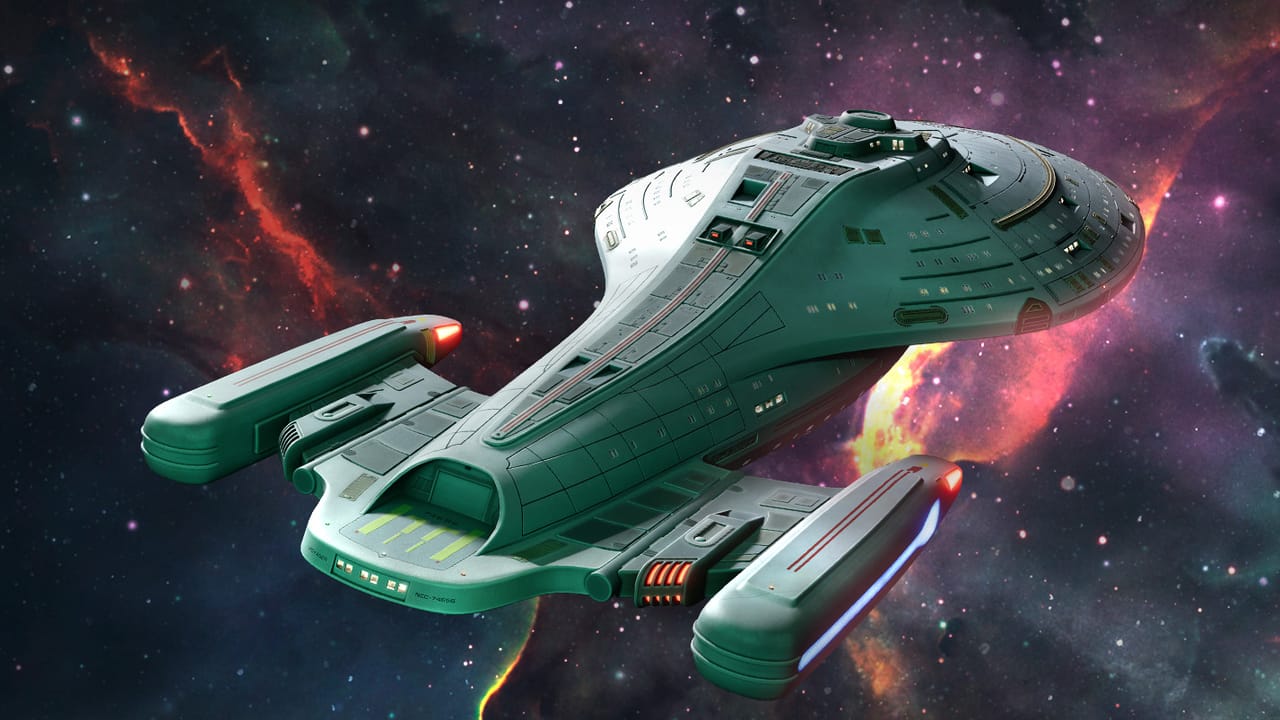
Star Trek: Voyager - Across the Unknown is the perfect tribute to its TV namesake. Not just because it smartly translates the show's premise into a survival-strategy experience—think Frostpunk with a dash of space combat—but because like the 1995 show, it makes up for its many, many, flaws through charm, gumption, and being absolutely ridiculous.
Across the Unknown—developed by Gamexcite and published by Daedalic Entertainment—landed at a fortuitous time for me. Despite growing up with its predecessors Star Trek: The Next Generation and Deep Space Nine, I'd never seen the Kate Mulgrew-led spinoff until this year. That meant the show was fresh in my mind as I set out on my own quest to lead the titular starship and its crew home after being flung to the farthest reaches of the galaxy.
The game bills itself as a chance for players to relive the show's events and—more importantly—revisit the (occasionally controversial) decisions made by Captain Janeway in the original show. These include her choice to ally with the Borg, murder Tuvix restore Tuvix to his original form, and even her initial choice to condemn the crew to a 70-year journey home.
Gamexcite created two major tools to make these choices "matter." First, there's the pressure of survival. Unlike other Star Trek shows, Janeway's decisions took place against the pressure of being far from home in dangerous territory. The games' resource-juggling systems does pressure the player into assessing these choices not just as Reddit arguments, but as means to help or hinder their progression.
The second tool—the one we'll be digging into today—is a framework for compressing 198 episodes of television (and boy are there some stinkers in there) into a systems-driven experience. This framework is Across the Unknown's secret weapon. Not only does it recreate the "episodic" feel of the show, it creates opportunities for Gamexcite to channel these narrative decisions back into the game loop and make the player's journey a dynamic adventure, not just a glorified "fix-it fic."
Across the Unknown recreates episodes through three types of storytelling events
Across the Unknown takes about 30 episodes of Voyager and divides them into two categories: the main mission and side missions.
Because the side missions come in different side quests, we're going to divide them as two different categories. Today we'll call them "main quests," "side quests," and "random events."
The main quests are the story events tied to player progression. The game is divided into 12 "sectors," that take place in a series of randomly-generated solar systems. Each sector is named after a Voyager episode, and converts that episode's plot into a multi-stage mission.
These missions juggle a mix of space combat, dialogue choices, and "away missions," where players send three crew members with different skillsets that can succeed or fail at different events. Failing these missions can result in a crew member injury, death, or even a game over.
Nine of the sectors contain side of optional side missions, also named for Voyager episodes. Two of these side missions, the "side quests" are miniature versions of the main quest. The player must navigate to a specific planet in each sector to start them, triggering quests with similar structure to the main quest missions. They can also leave the sector without triggering them.
These two types of missions also borrow dialogue directly from the show, allowing Across the Unknown's developers to selectively recycle Voyager's scripts.
Finally there's the "random events." the second type of side mission. These missions recreate Voyager episodes but trigger randomly. These contain no away missions and are resolved strictly through text-based dialogue trees.
This framework lays the groundwork for Across the Unknown's "what if?" storytelling: introducing characters, research technologies, and upgrades that can alter the course of the story.
Leaving nothing (or everything) to chance
Success and failure in Across the Unknown are often randomly generated. The player's main challenge is balancing the ship's resource needs and preparing the ship and crew to take on the daunting missions. These missions play out with tabletop role-playing-inspired logic. Players are presented with different choices, each with a different probability of success.
In many cases, these missions can be undertaken at the same time. This increases the odds of chance-driven encounters organically reshaping the player's journey across the Delta quadrant. For instance, if a player begins a mission where a character becomes unavailable, but starts another mission where their presence would be advantageous, that unexpected disadvantage can alter what rewards the player receives.
It also has the unintended side effect of recreating a major part of TV storytelling: the "A, B, and C plots." These refer to different storylines that are woven together through a TV episode. By blending together several "A plots," Voyager's episodic story is further reinterpreted through interactive fiction.

Image via Gamexcite/ Daedalic Entertainment
The bulk of the "choices" players make in Across the Unknown are left to the whims of fate, with only very specific choices being hard branching forks the player has absolute control over. Allowing players to guarantee success by memorizing dialogue trees would undermine the game's survival strategy pillars.
This reins in the scope of Voyager's branching story and enhances the value of rewards gained through failable quests. Because these rewards can't be guaranteed—even progressing on the "right" path is still up to a metaphorical die roll—they can be treated as more powerful in later events.
For instance, it's possible to save the life of the character "Kes" (who died in the show after actor Jennifer Lien was let go in 1998)—but it's not guaranteed, even if players make the "correct" choices. In later missions, if Kes is still with Voyager, she can significantly improve the player's odds of success. Because there's no guaranteed way to keep her around, giving her a powerful impact over later-game events becomes a narrative and systemic reward.
This dynamic leads to cumulative surprises even for players who have the show memorized and are trying to recreate its major story beats. But sometimes letting randomness rewrite Voyager isn't enough. On occasion, the designers needed to restructure whole episodes to enhance their potential in Across the Unknown.
Episodes sometimes are rewritten to enhance gameplay
Across the Unknown's narrative framework is impressive, but there's another major feat on display buried beneath the surface. The team at Gamexcite had to carefully "rewrite" many episodes of Star Trek: Voyager to compress hours of television into tiny text boxes.
Sometimes that meant blending whole episodes together so their stories fit the format. One great example of this is the combining of "Collective" and "Child's Play," two season 6 episodes concerning a group of Borg children, particularly one named Ichib. The in-game version of these episodes effectively sticks the events of Collective into the middle of Child's Play.
In Collective, the Voyager free Ichib and a group of Borg children assimilated into the iconic hivemind, then attempt to return him to his family in Child's Play. But his family betrays him in the latter episode, as it's revealed Ichib was genetically engineered to be a bioweapon to destroy the Borg—a death sentence for the young man. The structure of a TV season gave the audience time to get to know Ichib between the two episodes, but Across the Unknown would need to commit far more resources to recreate that emotional attachment.
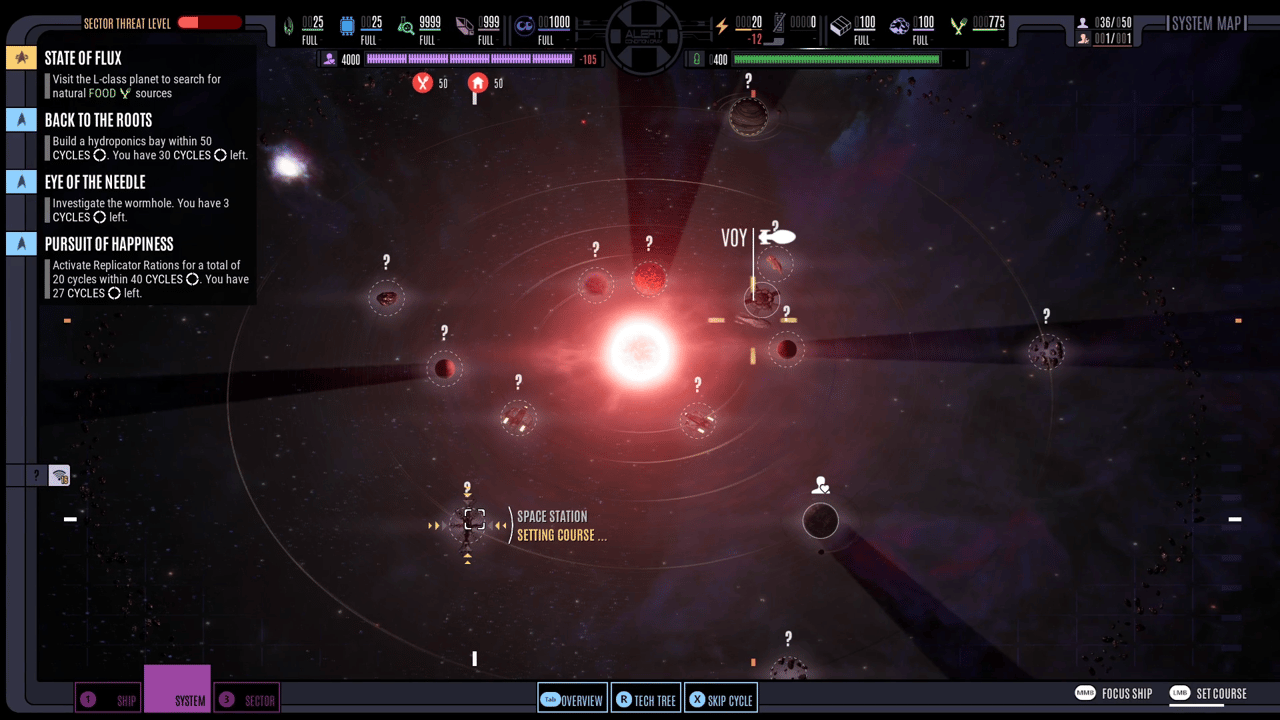
Image via Gamexcite/ Daedalic Entertainment
Instead, the game first introduces the player to Ichib's parents, then sends them out to rescue the children from the Borg. Already aware of Ichib's homeworld, the quest then tasks them to take him home. Restructuring these two episodes as a traditional "fetch quest" is a deft bit of game writing that preserves the show's emotional stakes without compromising Across the Unknown's open-ended gameplay.
The structure also gives the player more freedom with how to tell their own end to this story. They can ignore it, fail it, or choose to abandon Ichib, all choices that fold back into the survival strategy experience. This task is all the more impressive when you consider how the language of TV storytelling overlaps with games: it's highly structured, meant to be be quickly executed to produce episodes on a weekly basis, and is shaped by the needs of advertising breaks. Identifying what's transferrable—and what can be left on UPN—requires careful thinking and excellent writing skills.
May inspirations: Learning the language of storytelling
Recently a friend of mine outside of games asked me for resources on how to better analyze and understand media. I confess I sometimes forget that not everyone understands the "match cut" or understands why themes are for more than eighth-grade book reports. I do not confess to being an expert in this field—merely a ragged journeyman who will rant about how George Lucas' edits to Star Wars: A New Hope dilute a powerful editing choice comparable to the final ironic shot from the 1903 film The Great Train Robbery.
I credit two professors from my alma mater for driving me to madness: the late Dr. Patricia Zimmerman and associate professor Carolyn Straughn. I went to college to study craft. They both showed me how craft is deeply imbued with meaning.
Anyway. Your reading and viewing list, as promised:
Walter Murch's 1992 book is one-part history lesson, one-part masterclass on the art of film editing. "But Bryant, I am not a film editor," you might say. Luckily you don't need to be one. Murch's exploration of the technical and artistic aspects of film editing is a fine framework for assessing the difference between "logical" and "emotional" elements of creative work.
David Lynch & Twin Peaks: FIRE WALK WITH ME (video essay by Maggie Mae Fish)
How do you analyze the infamously inscrutable work of a filmmaker who refused to give any context for his art? Writer, actor, and comedian Maggie Mae Fish shows us it's really not that hard. Watch her work for a better understanding of how to study your own emotions—and the context of other works you've seen—when engaging in art.
Sometime back in the Bronze Age (or earlier?) an enterprising individual realized that mucus from a specific breed of sea slug produced a rare shade of purple. This discovery is one of the most fundamental building blocks for understanding art.
This is not because of some deep-spirited interpretation of the color that sits between red and blue. It's because this is a clear, plain-as-day example for how material conditions shape the production and meaning of all forms of art. Especially video games.
That's it for May. And remember what Janeway said: keep your shirt tucked in. Go down with the ship. And never abandon a member of your crew.