

At a Glance
- Brazil's state and federal governments have both begun directly supporting the country's game industry.
- This support is more robust than is often seen in other countries.
- With Brazil and LATAM's market growth, its model could help other governments support their industries.
How can governments—be they federal, regional, or otherwise—support the video game industry?
The topic has come up a number of times in the traditional Western video game industry, with the general answer being some variation on two topics: tax credits, and arts-inspired government funding. But those methods have been a very light touch, the kind taken when an industry is propelling its own growth, attracting funding, and fostering local talent, as we saw in much of the 2010s.
But it's 2026, and making games in established regions is more expensive than ever. The game industry could definitely use a shot in the arm—but when getting the government (particularly America's current government) to fund anything is a Herculean feat, what kind of support should the industry hope for?
The answers may lie in Brazil, a nation with an estimated 1,100 game studios and 13,000 industry professionals—a number comparable to longer established countries like France. The local game development community has spent the last decade organizing and lobbying federal and local governments to rally support for the nascent industry, culminating in an ecosystem that supports larger companies in the external development, co-development, and outsourcing business, and a kaleidoscope of creative indie developers able to experiment and iterate with more financial stability.
During our recent trip to Gamescom LATAM, Abragames president Terra Rodrigo and executive manager Patricia Satos (who oversees the 'sectorial export project' Brazil Games), caught us up on the state of the region's government support, and broke down how an infrastructural approach to government support goes further than tax credits and simple funds.
Brazil aims to boost its 'export economies'
If you were confused by Sato's job title and the relationship between Brazil Games and Abragames—don't worry, she knows it's a lot. Brazil Games is an export program funded by the Brazilian government through Apex Brazil. Apex Brazil is a national government agency promoting Brazilian exports (including video games) and outside investment. Abragames is the developer-led organization managing Brazil Games.
"It's difficult to [describe], because already in Brazil it's difficult to explain," Sato joked. "Apex Brazil has many export programs that go 'from beans to rockets,' as my manager like to say."
The word "export program" is important here. While those of us invested in video games as an art form would hope the government would purely fund games as a means of supporting its people's artistic expression, Brazil's framing of it as an export makes a lot of sense.
Video games are an amazing export product, as investment veteran Jason Della Rocca previously noted to us in a story on the costs of game development. They are produced primarily through human labor and can be made over long distances thanks to the power of the internet. They require little in the way of capital investment like factories, equipment, or infrastructure. And if you make games yourself, they're also easily sold across borders through international storefronts.
That's true for every nation. But Brazil and other emerging regions benefit from one major economic variable: the international exchange rate. At the time of this writing, $1 is worth five Brazilian real (R$ 5). That means every dollar (or Euro, or Canadian dollar, British pound) spent on Brazilian companies has an outsized impact compared to if it was spent in other regions.
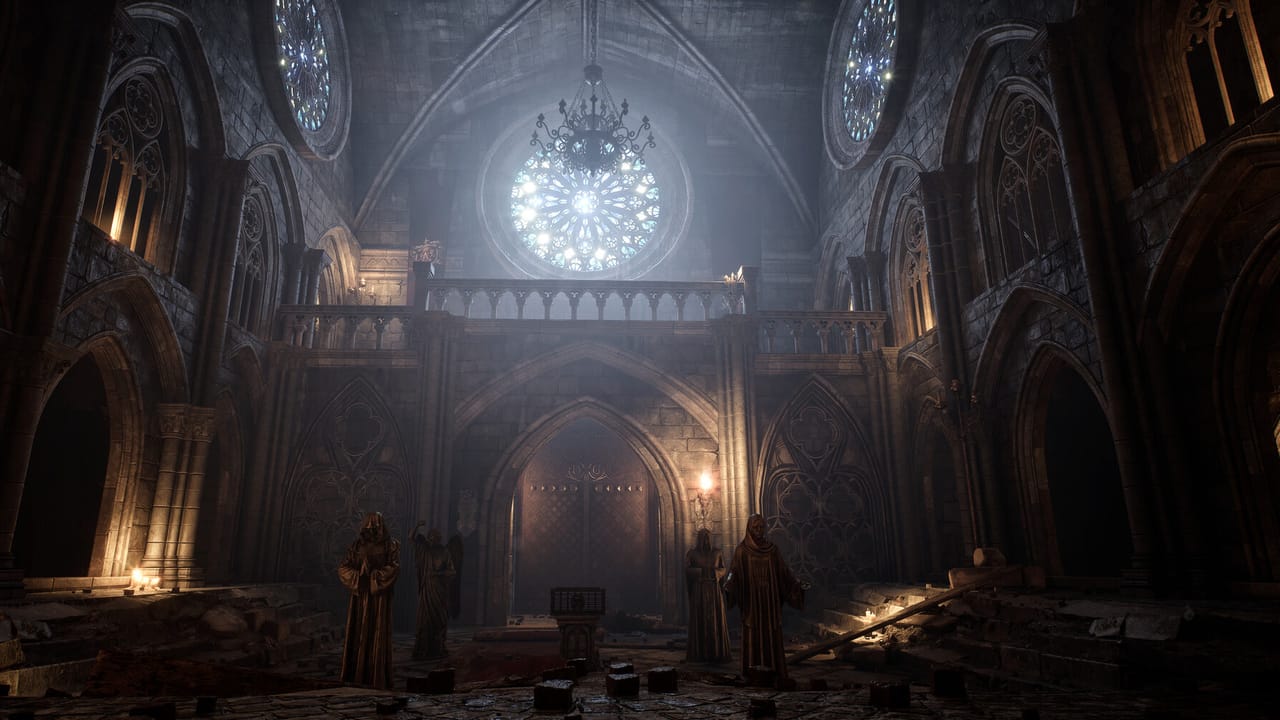
Pulsatrix Studios' A.I.L.A won "Best Brazilian Game" award at the BIG Festival Awards (image via Pulsatrix Studios/Fireshine Games and The Iterative Collective)
Brazil's existing tax incentives for video games shore up what Rodrigo called "the base" of the industry's ecosystem. "You can have your income tax for a company rebated for up to 16 percent of your income tax annually, and you reinvest it in cultural endeavors," he said. And video games in Brazil, as of 2024, officially cultural endeavors. "You can use this tax money to incentivize a project."
Studios united under Abragames are now lobbying the government for other incentives based on income tax and royalty payments. "This is where I think we can set up a very important base of tax incentives for companies to incentivize video games," he said.
But tax incentives aren't enough. "You use tax incentives when you need to attract [companies]," Rodrigo said, noting that countries like France, Canada, and the UK have been generous with tax credits for studios, but as "the middle" of the game industry has dried up in the boom-or-bust market environment, those regions are finding themselves back at square one, having to reinvest in the region—an even stickier problem when the largest regional players have been acquired by conglomerates based in other countries.
The hope is that the next big boost for Brazilian game developers is the creation of a "public fund mechanism" to create funds for game development backed by tax payments. Those funds can also absorb investments from banks and other institutions, and can then be invested in companies for exchange in equity—or even used on a per-project basis.
It's an ambitious project for any trade organization, and it didn't happen overnight. It was actually Abragames' PR representative Damien Sarrazin, CEO of HomeRun PR (which facilitated our travel to Gamescom), who offered a useful observation on how much he's seen the organization has grow in the last eight years.
"I've witnessed firsthand the organization's extraordinary commitment, passion, and long-term vision for elevating Brazil's game industry on the global stage," he said in a follow-up statement to Game Developer. He noted that while the group was lobbying the government and supporting events like BIG Festival (which evolved into Gamescom LATAM), it was nurturing "emerging talent," and championed service providers and work-for-hire studios.
It's those types of developers that represent the bulk of Brazilian game development scene—though there's still one challenge: they also face the risk of exploitation by the industry at large.
Brazil's biggest video game exports are indie games and work-for-hire companies
The Gamescom LATAM consumer show floor offered a useful snapshot of the state of the country's output. While companies like Roblox Corporation, Skybound Interactive, and Warner Bros. Games purchased the largest booths, there were three dedicated areas showing off dozens of locally-made indie games from companies like Venn Studios, which were sometimes more crowded than those from larger foreign companies. There did not appear to be any Brazilian triple-A studios on the consumer show floor.
Meanwhile, in the industry side of the event, a host of co-development, external development, and outsourcing studios were arranging meetings and wheeling and dealing to land clients.
Some, like Mad Mimic, juggle client work with internal development. But it's the aforementioned currency difference and other salary pressures that make it cheaper for large video game companies to contract out work to the region. One panel of Xbox outsourcing experts spent as much time discussing what they wanted to see from external partners as they did encouraging aspiring developers in the audience to look for jobs at these companies, saying it was a great first step in the industry.
An industry built on external development also risks getting caught off guard when partners cancel major projects—something that's plagued many studios, yanking away the security of supposedly stable jobs. Rodrigo said this certainly took place early in the wave of ongoing layoffs and cancellations, but the impact was blunted by the number of companies turning to Brazil to produce lower-budget games.
Those lower budgets are made possible by the exchange rate and salary differences between the Northern and Southern hemispheres. Those differences create conditions that can turn exploitative.
"A decade ago, it was exploitation for sure," said Rodrigo. "What we are seeing now is that it's not a matter of exploiting people for cheap jobs. The value-add that these companies are seeing in the talent more is worth more than just a cheap workforce" (he noted that China and India have cheaper labor than Brazil, but companies in need of external talent haven't abandoned the region).
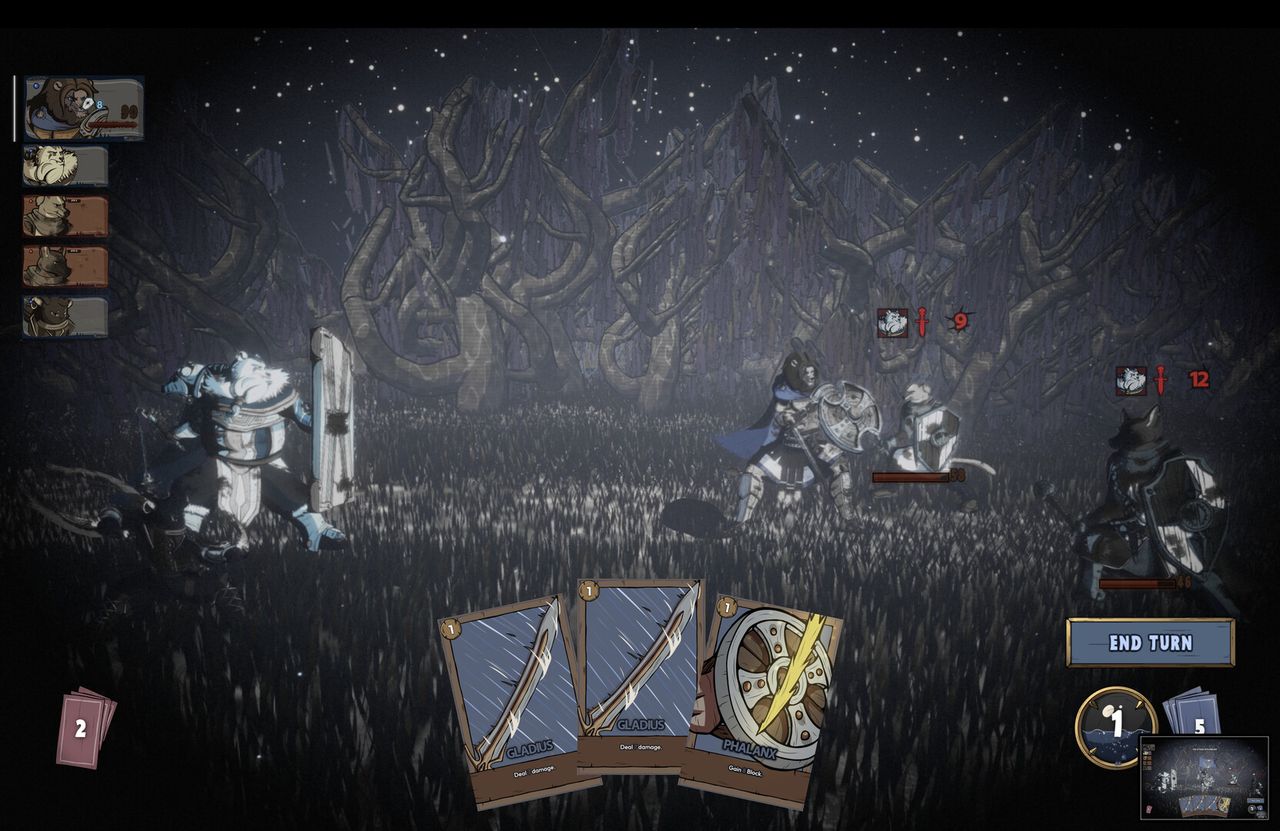
Image via Venn Studios
Abragames measures that change through the nature of contracts its members are receiving from outside countries. Rodrigo said studios are not just hired for cheap assets but "whole jobs," as he put it. Satos noted that the organization also runs an External Development Summit, that was established after organizers realized they needed to "do more" for Brazilian external development studios, or they might "not make the best decisions."
"If you talk with the international players that are here, like PlayStation, Xbox, and Nintendo about why they're here, they're not just buying services...they want new games."
Independent developers also face risk of exploitation as well, particularly from publishers who excel at making unique games but aren't fully educated on the math of recoup deals in publishing. "We've been hearing about this for years now," Satos acknowledged, comparing it to the dynamic in external development. "Some people can be naive. I know this because I'm a very naive person," she said with a healthy degree of self-deprecation.
It's why Brazil Games hosts an accelerator designed to educate and sustain local companies in both the art and business of game development—with one major objective being to help local developers avoid toxic business relationships. The currency exchange and salary gaps will put stress on every contract between Brazilian developers and the outside industry, and even a fair deal could represent a relatively worse payout than what they'd receive if they were from another region.
But that cuts both ways. External investment in Brazil has inadvertently created a training pool for local developers, who can take what they've learned and start working on their own games.
And if those games become hits—they may be the ones hiring external developers one day.
Game Developer was invited to Gamescom Latam by event partner Abragames, which covered flights and accommodation.