GameMaker has launched a new runtime (GMRT) it claims can meet the demands of larger teams, broader language backgrounds, and studios that need more than what a closed integrated development environment (IDE) can offer.
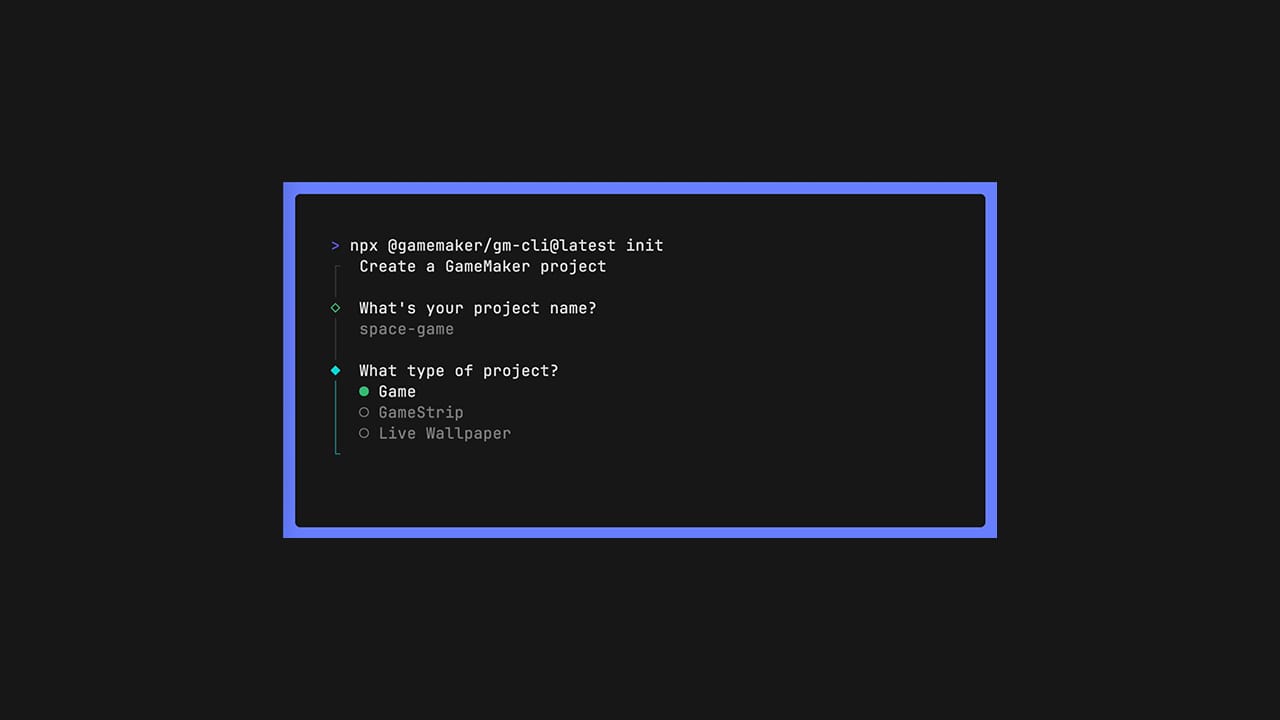
Notably, a new command line toolchain (GM-CLI) that works with both the new and existing runtimes has been also launched to enable developers to work in their preferred environment—without touching the IDE—and facilitate what is commonly referred to as 'vibe coding.'
That's because Claude Code is being included in the new CLI so developers using the 2D game engine can handle routine tasks via natural language prompts in the terminal. The generative AI tool is developed by Anthropic. "Describe what you want to build, test, iterate, or ship. Claude Code handles the rest," reads an explainer on the Anthropic website.
A blog post from GameMaker owner Opera suggests users will be able to leverage Claude Code to query project structures, hunt down bugs, and manage build configurations.
Speaking to Game Developer via email, GameMaker head Russell Kay said AI-assisted coding has become an important part of many developers' workflows and claimed it's important GameMaker reflects that reality.
"Because GameMaker offers tools to support everyone from first-time creators through to professional studios, we wanted to reflect that reality and give users who might benefit from AI the option to do so," he stated.
"The way we've done that is by providing tooling that lets developers interact with their projects through a command line interface and API access, which can be used with standard scripting interfaces, automation through GitHub Actions and an MCP Server—and without GameMaker running any servers for embedded AI tools. The tools are complementary and opt-in, and it is up to developers to decide whether they want to use them."
When asked about the concerns of some developers who are perhaps less sold on the technology—as highlighted in the latest State of the Industry survey—Kay said Opera is simply "offering tools that aspiring developers might benefit from."
"Ultimately, it’s up to our users how they choose to engage with them," he added.