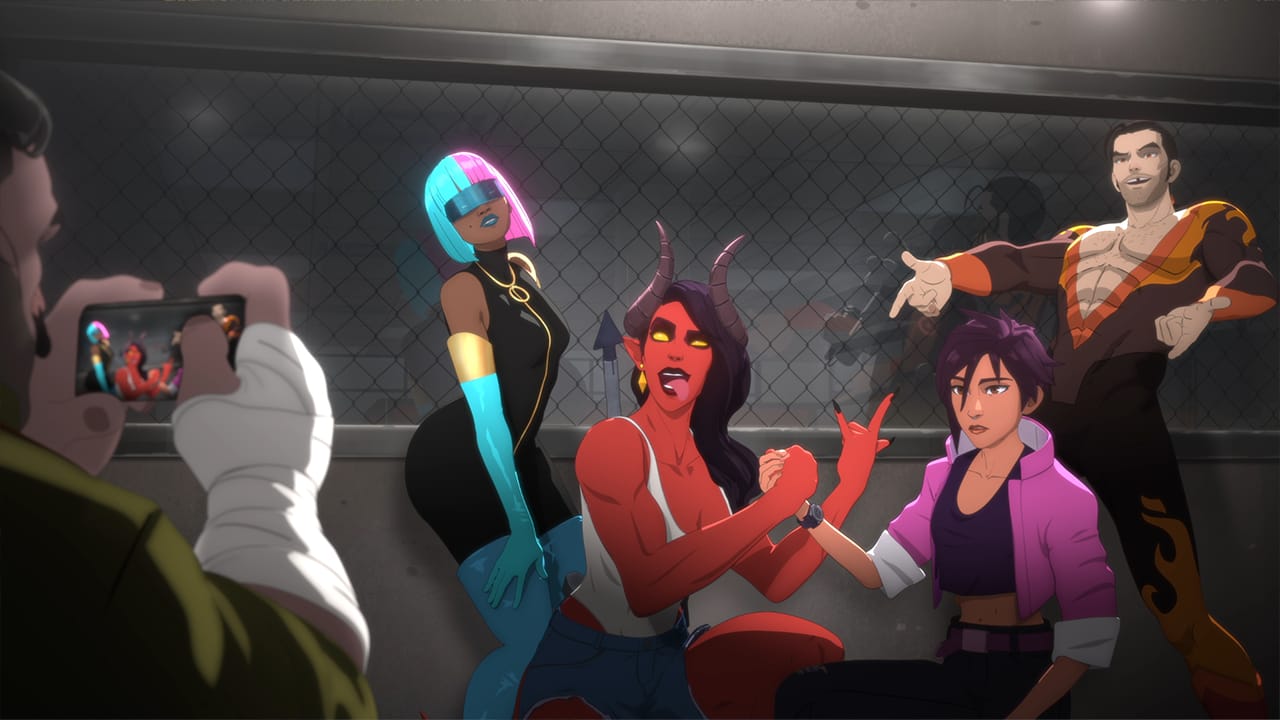
Here's a controversial take from the studio behind episodic workplace comedy Dispatch: If you're making a narrative video game then your writing needs to be good.
AdHoc creative directors and co-founders Nick Herman and Dennis Lenard dropped that bombshell during a talk at GDC Festival of Gaming, and insisted that while it might sound like a big old jape, they were deadly serious.
The duo explained there is often a lack of specificity when it comes to defining 'narrative' in video games. There are plenty of award shows that dish out prizes for 'Best Narrative' or 'Best Story,' but what do those words mean on a nuts-and-bolts level? Easy. It's about writing, not plot.
"When you walk out of a movie theater, you don't tell your friends you thought the narrative was great. You walk about the writing," said Lenart.
Herman tosses out a supporting point: "How many of your favorite TV shows would you say the plot is great but the writing is terrible? We expect more from other mediums than we do our own."
Lenart believes that when someone begins waxing lyrical about narrative in video games, they should be more specific about what they're actually discussing. Perhaps they're referring to a story players experience through environmental exploration, or a non-liner approach that can be unfurled in any order.
Narrative is a word of multitudes, and for AdHoc it means "great dialogue."
"You need to write memorable words," said Herman. "Memorable words mean you'll have memorable characters, and memorable characters mean memorable relationships that people will actually care about."
Lenart said that great narrative titles aren't defined by plot, but rather the moment-to-moment exchanges that imbue characters with depth. "We intentionally told a very simple story, but with complex characters," he added. "By focusing on writing great dialogue for interesting characters, we knew that no matter what the plot ended up being, we'd have something special and entertaining."
It's also, he explains, difficult to know whether your writing is good until you have shared it with players. That's why AdHoc leveraged an interactive script tool that allowed the team to playtest the script while it was still being reviewed and revised in the writer's room. "If it's not working on the page, it's very likely not going to work on he screen," continued Lenart.
It's an exercise that preserved resources while enabling rapid iteration. Herman explained that after AdHoc completed a round of script revisions, it would record voiceover and create a storyboard animatic. Then, it completed one final playtest with around 100 blind testers from around the world using a playable animatic to determine whether the story and characters were actually resonating. Only then would AdHoc begin properly animating a scene.
Lenart said it's an approach that allowed the studio to begin full production with "absolute confidence" in its vision, and said that was only possible because AdHoc takes its writing process as seriously as other studios take their design process.
Game Developer and GDC Festival of Gaming are sibling companies under Informa Festivals.
Read more about:
GDC Festival of Gaming