At a Glance
- Clair Obscur: Expedition 33 writer Jennifer Svedberg-Yen explains how thoughtful information sharing can help your team.
It's no surprise that Clair Obscur: Expedition 33 keeps racking up wins for best storytelling. Sandfall Interactive gifted the world with an over-the-top operatic tale that runs the emotional gamut, introduces players to fantastic characters, and enchants them with a fresh fantasy world literally defined by a family's pain and loss. It will likely be a staple of game development textbooks for years to come. But if you want to learn what made it possible, you need to go beyond the text and dig into how it was made.
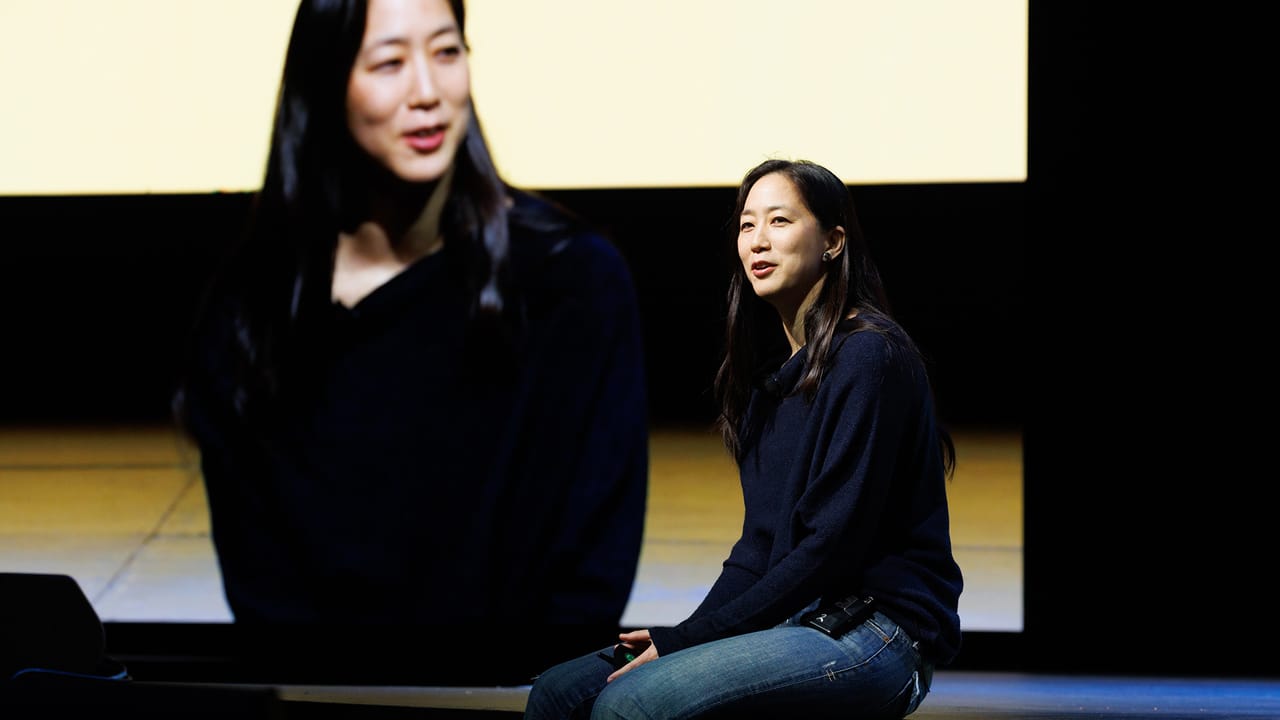
Fortunately, the Sandfall team—and particularly writer Jennifer Svedberg-Yen—have been candid about their creative process (for which we should be thankful, given how much disinformation has spread on LinkedIn about their work). During her visit to DICE 2026 (where she accepted the award for "Best Writing" on behalf of Sandfall at the annual DICE Awards), the fast-rising writer was keen to explain to industry leaders how they can tell tales as equally grand.
She kicked off the summit with a short talk on basic creative principles—which one could interpret as a nudge to the executives in the room to let their teams pour themselves into stories instead of following step-by-step instructions from textbooks. It was after she accepted the award that we got to ask Svedberg-Yen about advice she'd give to fellow writers—not just for telling great stories, but for telling great stories with teams of non-storytellers.
Her response: telling game writers to "understand your audience and how they like to receive information. Not everybody likes to receive information in the same way."
"Some people prefer to discuss it in person and be able to be flexible and agile and talk right there. Other people prefer to have it in text so they can review it, think about it, and then respond. Some people like having lots of detail and like understanding where the source is coming from. Other people say 'just give me a couple of key words so that I understand the essence and let them do what they want."
Lucky for us, that advice doesn't just sit in a vacuum—it tells us something a little about the making of Clair Obscur, and shows how stories in narrative-heavy games are ever-evolving beasts constructed in bits and pieces by a team, not scripts strictly executed at leadership's behest.
Visual storytellers process text in different ways
As an example, Svedberg-Yen shared two examples of working with the Clair Obscur art team. She said that art director Nicholas Maxson-Francomb is a man of extremely few words (or at least, when it comes to reading words). "He doesn't like to have too much information. He doesn't want to actually read tons of things," she said with a small laugh. "He preferred just having a few keywords to give him the the general essence of what he needs to do for that particular character or the environment."
Meanwhile the environment artists at Sandfall Interactive were clutching for a little more detail than what their higher-ups were after. They needed "a list of suggestions" from Svedberg-Yen to build the fantasy Belle Époque-inspired game world. "As a writer, what I'm careful to do is [ensure] there are certain areas where I will just offer suggestions, so they have a starting point, but they are not mandates," she elaborated.
"When we do need [something] for the story, then I will say this is something that is necessary for the story, but for other things, it'll be clear that these are just 'offerings.' And then they can choose what they like."
For those less knowledgeable about game writing, it may be surprising to see that the entire studio wasn't essentially working off of all the same information at the same time, given how holistically it comes together in the final product. But that's the magic of interactive storytelling. Svedberg-Yen and creative director Guillaume Broche share the storytelling credit, but nothing that they write on a page can fully encompass all of the story that players will experience.
The black-and-white cutscenes inspired by French cinema, the expressive movements of the faceless Gestrals, the lyrics of the song "Une vie à t'aimer"—those come from developers with the freedom to interpret the given instructions.