At a Glance
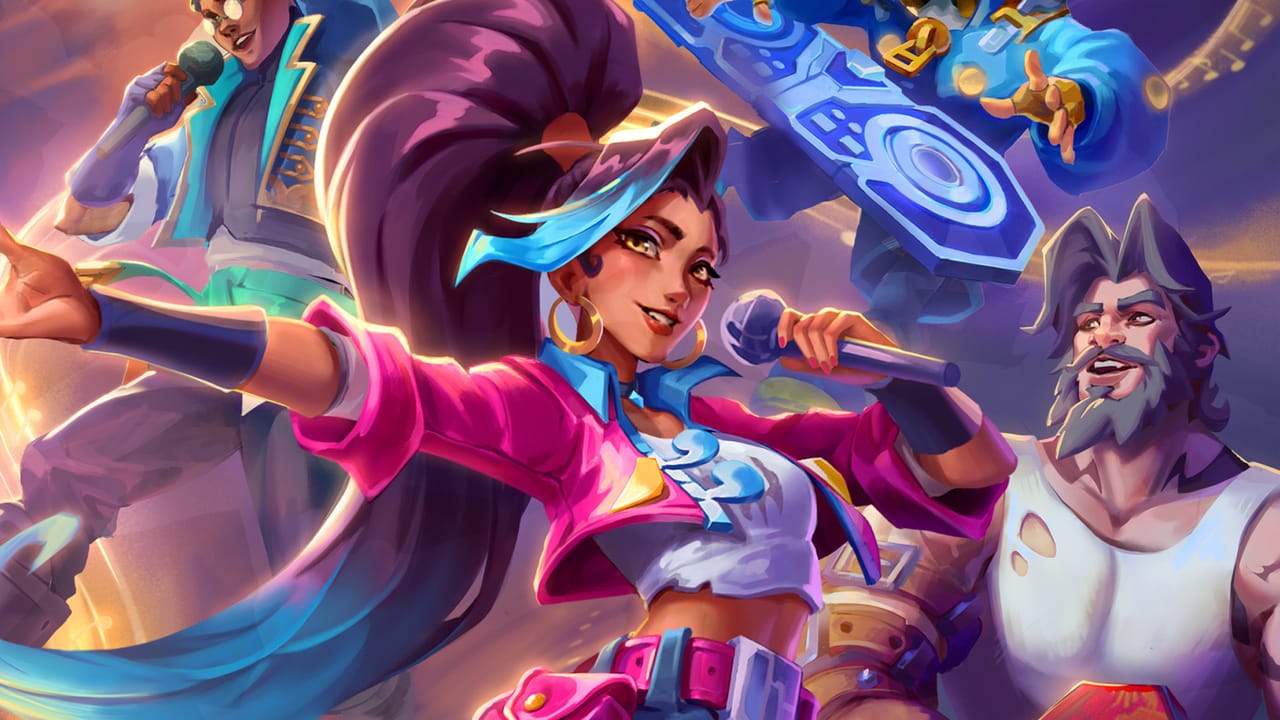
- Iridium Studios' People of Note mixes musicals like Hamilton with turn-based RPGs like Final Fantasy.
- The game lands right as turn-based RPGs are having a renaissance—but musical-inspired games have been tougher to sell.
- To hook players, Iridium Studios leaned into deep turn-based combat—and letting players tune it to their hearts' desire.
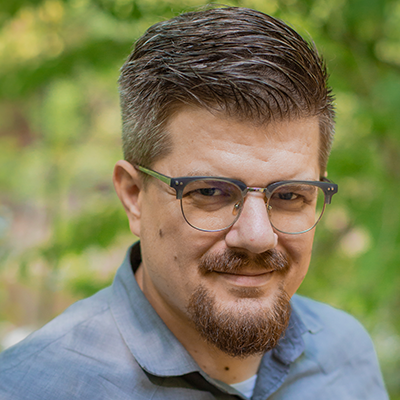
Iridium Studios founder and People of Note creative director Jason Wishnov is a self-avowed "theater kid."
What exactly is a theater kid? Wikipedia defines it as "a common stereotype of a young actor, usually a student, who openly displays a talent and/or passion for performance. Common traits associated with the stereotype include obsession with or devotion to school plays, the tendency to spontaneously perform or quote lyrics in everyday social situations, and a personal obsession with musicals."
He's not an outlier in the game industry. Wander around most professional events and you'll find plenty of Broadway afficionados ready to smash you with Sondheim or trap you with a bit of Taymor. But developers' passion for showtunes and songbooks hasn't helped the genre—a mainstay of the theater and movie businesses—translate to video games. It's only recently that we've seen games like Stray Gods, Alan Wake 2, and UNBEATABLE play more with the form (and only the first wears the word "musical" proudly on its Steam page).
It's a risky move to make a video game musical—but Wishnov's been grinding away at that challenge since 2016, when he saw the pop culture phenomenon Hamilton. In an interview with Game Developer, Wishnov said it was his pitch to make a turn-based musical that turned off prospective partners. "I think the only mildly successful turn-based RPG in [2016] was Persona 5." It would be years before his passion for the form was validated by a slew of successes hitting the market, with recent major hits like Clair Obscur: Expedition 33, and Metaphor: ReFantazio riding a wave of player passion pushed forward by games like CrossCode, the Trails series, and Chained Echoes.
But no matter how "right" you are about the commercial value of a genre, you still have to catch players' interest and get them to sink their teeth into something new and unconventional. With People of Note launching today, we quizzed Wishnov on what it took to make this musical RPG more than just a gimmick—and why he thinks giving players complete control over their experience can help them try genres they might otherwise reject.
A songbook for a video game musical
People of Note tacks in a very different direction than its cousin Stray Gods, which put players in the role of a protagonist belting out showtunes. Its turn-based combat and general storytelling take place in between the big bombastic musical numbers, treating the big Broadway moments the same way a cinematic video game might use a pre-rendered cutscene: as a reward or payoff for completing a major challenge or reaching an emotional high point.
This of course, is complimentary to the general operating theory of musicals—that the songs represent huge emotional high points for the story. Music still drives People of Note's gameplay—but spreading those big numbers out across the 25-hour game gives time for the turn-based combat to take center-stage.
Just like how People of Note's story follows a character named "Cadence" putting together a band blending different musical styles, the combat system is built around blending those genres and exploring the strengths and weaknesses of each type of music (pop, rock, EDM, and hip-hop). "We had to create every single battle track 11 different ways to keep track of all the different single genres that could come," Wishnov said.
The depth is further-layered by a turn order system inspired by "staffs" seen in sheet music. Turn order indicators have become a potent part of modern turn-based RPGs. Sometimes they are just visual elements telling players what character will take their actions next, and sometimes they are a resource or system that can be manipulated. The staff-based turn system shows not only when characters will activate, but the number of actions they can take (inspired also by "time signatures" found used in composition).
This all serves a design philosophy that Wishnov calls "battle-strategic" as opposed to "attrition-based" design. In People of Note, players don't have limited resources that need to be re-upped after major encounters, a common strategy for extending game length in some turn-based RPGs. Their ability points are restored at the start of each battle, so they do as little doubling back as possible.
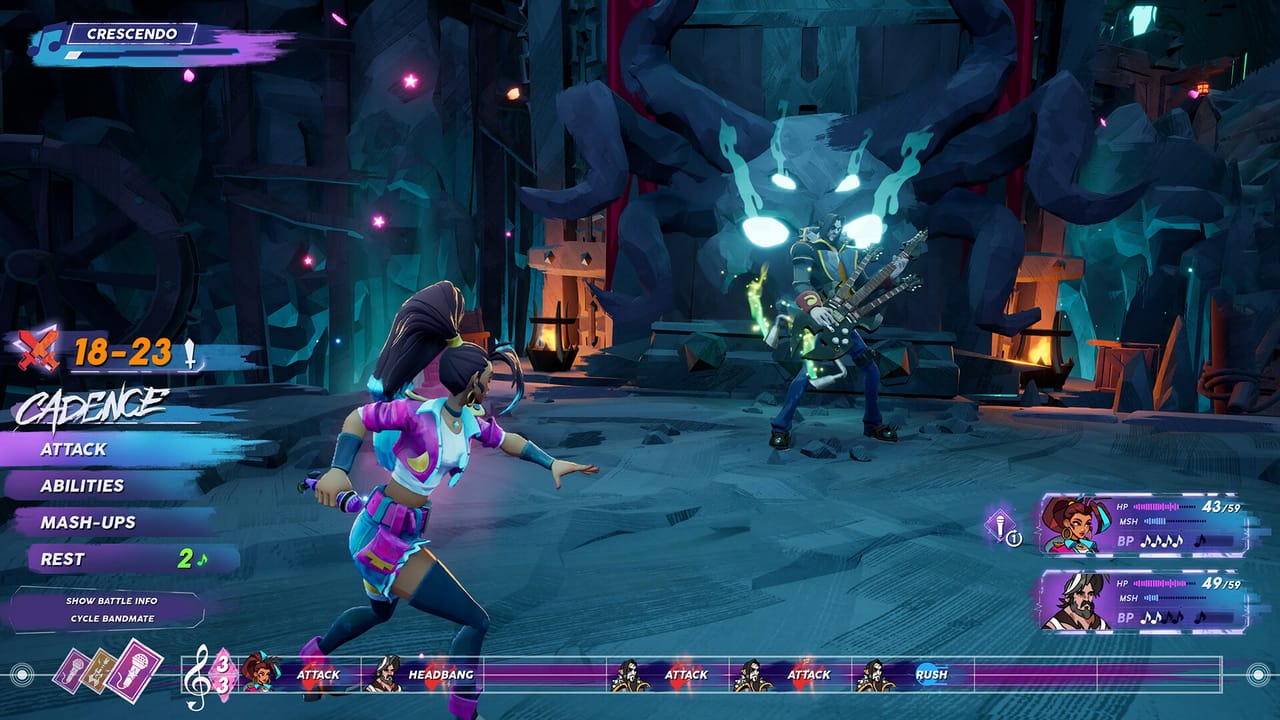
Image via Iridium Studios/Annapurna Interactive
Wishnov argued that attrition-based design sometimes drives players to hold on to certain items for big battles that should fit in the normal game flow, ignoring the full potential of their toolkit. "I wanted the player to constantly be seeing and feeling something new," he said. "You never stay that long in one area, you never fight the same enemy that many times."
He compared it to the strategy seen in Nintendo's 3D Super Mario games, which hit players with new types of encounters and puzzles rather than asking them to fight the same type of enemy many, many times.
When discussing the topic with Wishnov, it felt like his theater kid passion was being channeled through his experience as a designer. However, even the most intelligent design choices can change completely once a player gets their hands on the game. How does all this translate into an experience that can lure players in to a new genre?
Wishnov's theory: success means giving them as much control over their own gameplay experience as possible.
"If someone wants my burger without a tomato on it...I will make it without a tomato"
On top of a dislike for attrition-based design, Wishnov confessed to another frustration in game design: games that lack any difficulty or accommodation modes, forcing players to meet the game on its level and potentially have a frustrating experience if they want to understand why other people love it.
We of course, were talking about Elden Ring, which like many Fromsoftware games, has produced plenty of discourse about whether its approach to difficulty is the correct way to go. Elden Ring lets players tune difficulty by uncovering items, builds, and strategies that can tone down tough encounters. But figuring out which elements trigger that approach requires trial-and-error or an external guide.
Wishnov would rather just let players decide what features they want to engage with. In People of Note, players can not only tune the difficulty between easy, medium, and hard, but they can set the game to skip sections they aren't having fun with. That includes the puzzles. The cutscenes with the big musical numbers. And...the combat?
"We wanted to make this experience as customizable as possible," he said. "I recommend to all players that you experience it with everything in there, but it's not my place to tell you what you like and don't like." He compared the approach to bumpers in a bowling alley, or a restaurant that will modify your order on request rather than push back on you if you so much as ask for a salt shaker. "Difficulty isn't a set thing. Difficulty is the difference between the challenge of the game and the skill of the player," he observed.
"If [I'm] running a restaurant, and someone wants my burger without a tomato on it, by all means I will make it without a tomato on it. "I'm just not going to run the fancy restaurant where they they yell at you. I run the restaurant where we say, 'you got it, honey, coming right out.'"
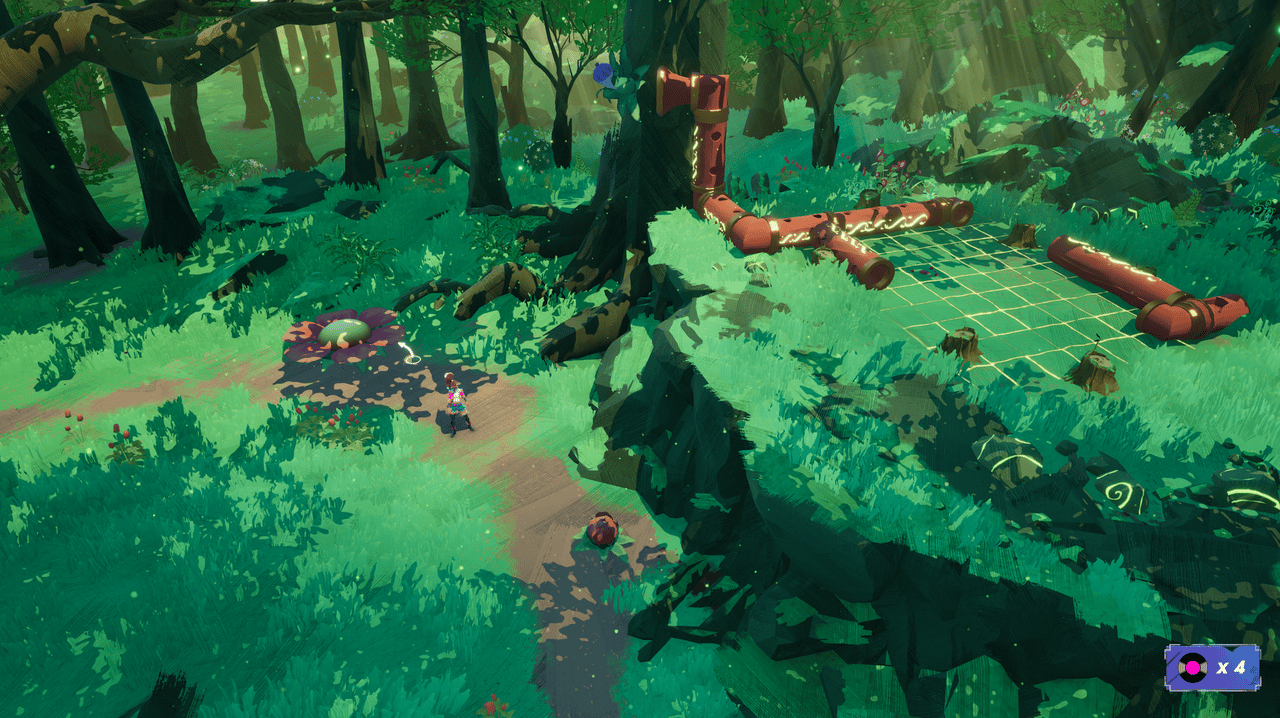
Image via Iridium Studios/Annapurna Interactive
But accommodating player tastes isn't just about letting players turn modes on and off. Wishnov gushed over People of Note's puzzle battles, a feature he said helps players dig into the nuances of People of Note's combat. "They are truly effectively chess puzzles in a turn-based RPG form," he said.
"Puzzle battles" are optional combat sections that clearly tell the player there is exactly one solution to win the fight. Figuring out that solution lays out a deeper combat synergy intended by the developers. Some games will tightly restrict what characters or items players can use in these puzzles to hammer that solution home.
It's a familiar game mechanic that's popped up in many role-playing and strategy games of late (Wishnov said Chucklefish's Wargroove was a major inspiration), and like in People of Note, they lure players in with promises of extra rewards. Players not interested in the extra challenge or depth can breeze on by, and those tempted by the siren song of complexity can dive right in.
Wishnov said if he didn't look at People of Note through this lens, even people interested in the game's Broadway-inspired tunes just go and watch the musical numbers on YouTube.
Expanding player options to skip or participate in gameplay may remind readers of comments from Jennifer Hepler, a writer on Game of Thrones Ascent, Unavowed, and titles at BioWare including Dragon Age II. In 2006, she speculated in an interview that there might be room in games for narrative-focused players to skip the combat the way combat-focused players can skip cutscenes and story. Hepler endured a major online harassment campaign for her comments when in reality she deserves credit for identifying player needs that weren't easy to address at the time.
20 years later, Wishnov's theory of turning players into theater kids may be what puts her idea to the test.