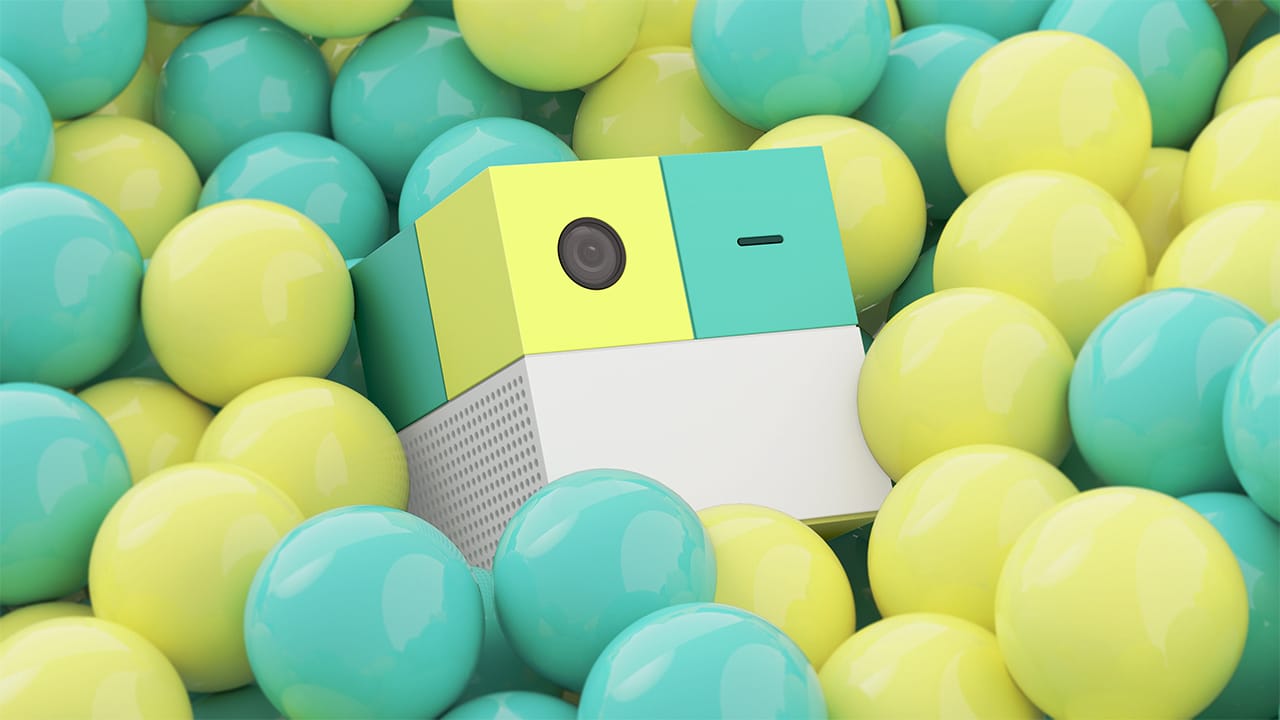
The leadership team behind Nex Playground, a motion-controlled console geared towards families, are dreaming big.
The cuboid device outsold Xbox in the United States during the 2025 holiday season (via The Verge), putting it on the radar of many within the game industry (including this journalist).
Now, the platform is looking to build on that momentum by going global. It'll be touching down first in the UK and Ireland before continuing to make inroads in other key markets around the world.
The ambition? Become as popular as one of the best-selling consoles of all time. No pressure. "Our ambitions are as big as the Wii," stated Nex Playground head of international, Tom Kang, during a conversation with Game Developer earlier this week.
Kang argued the Wii proved there is a market for action-oriented motion gameplay due to the success of the platform itself and software like Wii Sports and Wii Fit. It's hard to dispute that appraisal.
The Nintendo Wii sold over 101 million units worldwide across its lifespan—becoming the best-selling Nintendo home console ever until it was eclipsed by the Switch.
It's a wild target, but one that Kang feels is reflected in the early promise shown by the Nex Playground and a growth plan that will prioritize a "slow and steady" expansion as opposed to relying on meteoric success.
He tells us the Nex Playground has sold around 1 million units in the United States to date—but, crucially, that the console sold out in 2024 and 2025. "We ran out of supply," he explained, noting that Nex basically missed out on the "entire holiday season" last year due to overwhelming demand.
"Right now we're growing way faster than we were last year. But our supply chain is much better, so our expectations are much greater," he added, before confirming Nex has secured all of the necessary components for the year amid an ongoing memory crisis that has already pushed the company to increase the price of hardware.
Kang explained the Nex Playground's international journey will begin in the UK before the console eventually releases in Europe and Asia—although he doesn't expect to touch down in the fiercely regulated Chinese market for quite some time.
He expects North America to comprise around 50 percent of the platform's market share, with Europe and Asia representing the other 50 percent.
When it comes to marketing the device, Kang suggested the Nex Playground effectively sells itself if you can bring players to a demo booth. For instance, he revealed there were over 1 million play sessions at U.S. retail stores in December 2025. Social media is another part of the company's overarching strategy, with Kang underlining the strength of selling on the TikTok marketplace in the United Kingdom.
"I was at Amazon before this," said Kang. "We have brought in a full performance marketing team who understand how to reach and segment gaming audiences. We use kind of the brand and performance playbook and we use a lot of data."
Nex also intends to lean heavily on the brand channels of its established IP partners—with the company already offering software on the platform based on major properties such as Dora the Explorer, Sesame Street, Peppa Pig, and Bluey.
"We're not a long tail model. We are very much a curated selection of high quality games."
Discussing how the platform handles software, Kang explained Nex is a "closed ecosystem." That means the company publishes every single title that makes it onto the Nex Playground catalog, which is accessible via a quarterly or annual 'Play Pass' subscription.
Those subscriptions retail for $49 and $89, respectively.
Nex currently has three internal studios working on software and is partnered with around 15 external studios worldwide (including three in the UK). "All the games are funded and published by us," said Kang. "We want to maintain the quality and control of the ecosystem. Our goal is not quantity, but quality of games. This is not going to be a discovery mess. We want it to be very accessible for families."
Kang said the aim is to add around 15 to 20 titles to the Play Pass catalog each year, with the company's internal studios focusing on the most popular genres such as music, rhythm, sports, and fitness. External studios will then be tasked with iterating in other genres that best suit their experience and expertise.
Studios working on projects (or who perhaps have existing titles) that would be a good fit for the Nex Playground are being encouraged to reach out. Kang said the company will consider anything that meshes with the controller-free technology and family-first sensibility of the platform, noting the inclusion of Fruit Ninja as an example of an existing release that has become a "high performer."
As for how prospective parters will be compensated for their efforts, Kang said Nex operates on an "engagement model" that rewards developers with a share of subscription revenue based on metrics such as time spent in-game. Nex also offers minimum guarantees and royalties described as "competitive" by Kang.
"We are regularly paying—even early in our life cycle—royalties above and beyond minimum guarantees. In some cases significantly above that," continued Kang. "That's why it's becoming an attractive platform for developers."
For Kang, it's also important that Nex is able to meaningfully connect with players in different markets. That means the company is interested in partnering with studios across Europe and Asia as it expand into those regions. Crucially, he also stressed the importance of delivering "fully localized" IP.
"We do expect to expand the developer community outside the United States," said Kang. "It's hiring studios in those markets—which we're already doing—where we're going to launch. But like I said, everything we do is very measured. You will never see us go on an acquisition spree. You will never see us opening six studios a year. That doesn't make sense. it's very much [a case of] let's measure our growth, grow at a responsible rate, serve our customers and not overextend ourselves."
Hardware might be the focus right now, but subscriptions are expected to drive growth in the long-term. "We are a subscription platform," added Kang, who explains that it's vital the company's attach rate remains healthy in order for the Nex Playground to realize its purported potential.
The Nex Playground includes access to five titles out of the box, but a subscription is required to widen that pool. Right now, the console has an attach rate of around 80 percent—meaning that four out of five owners are buying a subscription.
When you narrow the scope to people who've owned the device for more than a year, the attach rate is around 70 percent, which Kang said indicates the Nex Playground is "proving sticky."
Kang hopes that stickiness will give Nex the runway to execute an expansion plan focused on curating quality software as opposed to continually updating hardware.
"We're not a long tail model. We are very much a curated selection of high quality games. And it will continue to be that. We will never have thousands of games on the platform," he added.
"We'll have maybe a couple hundred [games] and we'll continue to upgrade quality, upgrade content, upgrade features, and understand what consumers like and double down on those things."
If the company succeeds, perhaps we'll be talking about the Nex Playground for years to come.