

At a Glance
- Indie developer Evil Empire curates and runs the Triple-I initiative, an annual game marketing showcase.
- Around forty developers pay about €14,700 after being selected to appear in the event.
- The fees cover the cost of operations, which Evil Empire COO Benjamin Laulan says makes for a better event.
Showcases, streams, and "festivals" are the modern high-profile events for today's video game marketers. Landing in the right stream—whether it be Geoff Keighley's Summer Game Fest, region-spotlighting events like Latin American Games Showcase, or a event like the Triple-i Initiative stream—can help you attract a huge audience.
But a huge audience doesn't guarantee your game will be a hit. Sites like Raider King have documented how even appearing in front of millions of viewers doesn't guarantee sales success. Is there any way showcase organizers can reliably build an audience that can convert viewers into buyers?
Evil Empire's Benjamin Laulan thinks so—and has data to prove it. This year the company behind The Rogue Prince of Persia and the upcoming Castlevania: Belmont's Curse saw a record number of players wishlisting games shown in its Triple-i Initiative showcase, with a median of 60,000 wishlists per game on the back of over 3 million wishlists in total (averaging a total of 80,000 wishlists per game).
How? During a conversation with Game Developer at Gamescom LATAM 2026, Laulan said it's because Evil Empire treats the showcase as a "not-for-profit" event. By not pursuing pure growth, but maintaining a firm "floor" for the type of studios selected to participate, it's created a quality bar that drives viewers to trust they'll see games they're interested in—and makes them want to come back year after year.
Triple-i participants paid €14,000 to show their games in 2026
To participate in the Triple-i showcase, developers who win approval from Evil Empire must pay a flat fee, which this year totaled at €14,000 (about $16,400). This fee covers Evil Empire's costs for running the event, including video production, moderation, marketing, and more.
For comparison, leaked reports indicate that Geoff Keighley's Game Awards organization charges between $450,000 and $1 million to show your trailer…unless of course, you receive a blessing from Keighley himself and can show your game for free.
"We don't make any significant amount of money with this," Laulan said as he compared Evil Empire's showcase to Keighley's "megastravaganza" (which does boast a higher raw viewcount). "Unlike other showcases that are [running] a business, we just want this to be a powerful marketing tool that we believe the industry needs, and that we need as well as a studio."
Putting a "floor" on the cost of participating supports the Triple-i Initiative's editorial vision, which is focused on curating a specific audience, not representing all independent developers.

Prove You're Human debuted during the Triple-i Initiative 2026 showcase. Image via Sunset Visitor/Black Tabby Publishing
"We are trying to talk to very well-targeted audience, and for that, we believe that means we need to be very clear about our proposition as a showcase," he said.
The independent studios who can afford that price tend to be "known entities" that can hit an expected quality bar and have an audience whose interests overlap with other games in the showcase. They also become invested in marketing the event itself, introducing their fans to works from other developers.
That means a large chunk of the viewing audience consists of players who are fans of the participating developers, and are open to buying games with similar gameplay or themes.
By treating the event as revenue-neutral for Evil Empire—instead of a for-profit business enterprise—the studio has agency to decline games that don't fit its audience, even if they're offering truckloads of operating cash.
Running the Triple-i Initiative "at cost" makes for a better showcase
This is the scenario Laulan presented: Imagine you're running a company that produces an annual game marketing showcase. Because it's your core business, you're required to maximize revenue from each event because this is your company's revenue stream. It's how you make a profit, pay your employees, and reinvest in your production capacities.
Now imagine you're so successful that you're able to charge a minimum of $500,000 to appear in your broadcast. That narrows the field of companies who can afford to present. You'll can earn money from companies like Amazon, Ubisoft, and Wargaming—but now you have an audience problem. Those companies' fans may not be interested in games from other showcase participants.
You solve that problem by seeking out games with loyal, engaged audiences who will follow those developers anywhere and don't "need" your show's support. Those studios may realize they don't need to spend $500,000 on your event to maximize their marketing push, or couldn't afford that number in the first place.
So how do you get them to participate? You let them in for free.
This means the content of your show is completely defined by the economics of your business strategy. Admittedly, non-profit showcases Day of the Devs don't share this same burden, but in those cases the mission statement of supporting low-profile indies means they target smaller, even-more-niche audiences.
Quality over quantity matters when it comes to the audience
That said, Laulan spoke far more kindly about niche audiences than mass viewing events during our conversation, urging developers to not just blindly take a showcase's value just on name and viewing numbers. "If you're developer and want to announce your game as a showcase, please don't just look at the viewing numbers as a metric," he said. "Look for [games similar to your own] and see how they performed."
He described is as the practice of "talking to your audience"—and that audience may not be at the events you think they are.
And when you find that audience, he urged developers to give em the ol' razzle-dazzle. In a previous interview with Gamesindustry.biz, Laulan joked that Evil Empire's partners chafe at the notes he gives on trailers, but there's a reason he harps on making the best trailers for Evil Empire's broadcast.
"You're making a show!" He exclaimed, painting a picture of the E3 broadcasts of yesteryear where a surprise character reveal or developer title card could draw a huge reaction from the crowd. "Try to connect emotionally."
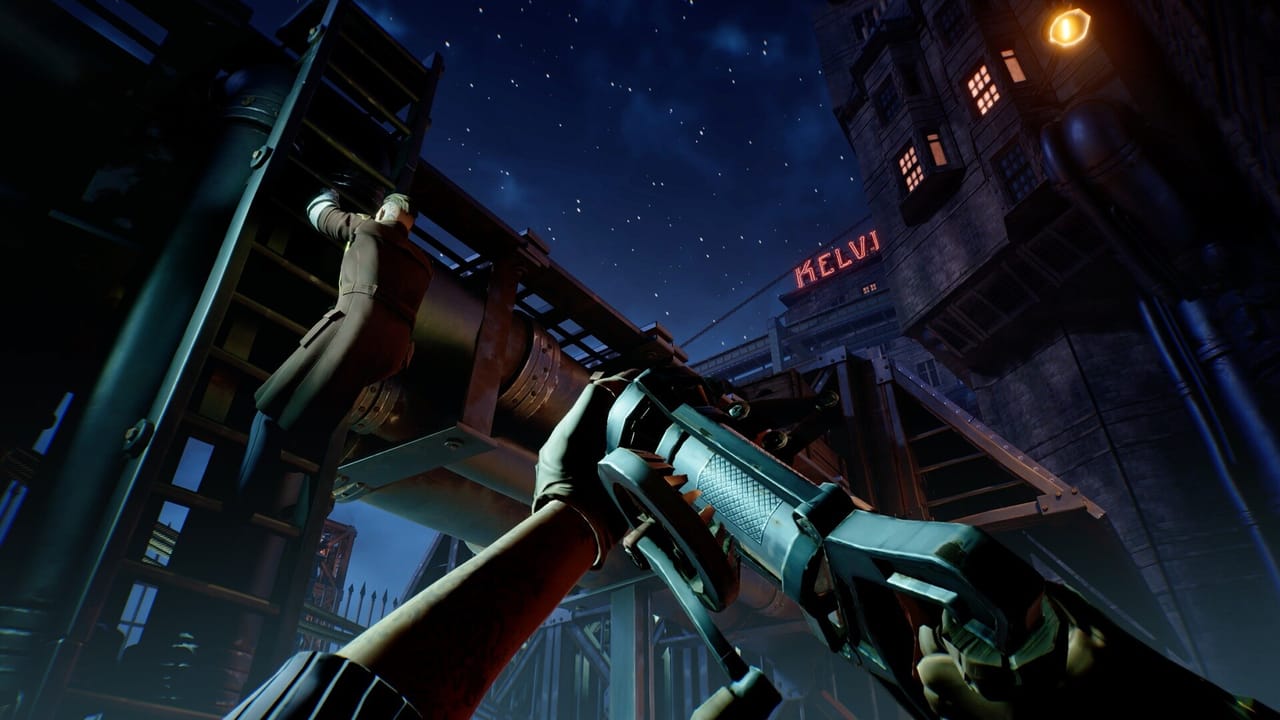
OtherSide Entertainment's Thick As Thieves re-introduced itself at the Triple-i Initiative. Image via OtherSide Entertainment/ Megabit Publishing
Of course, there's another way to look at all this. Laulan's the first to admit that Evil Empire spun up the Triple-i initiative to drive hype for The Rogue Prince of Persia, meaning the company effectively created the equivalent of its own first-party marketing showcase like the kind produced by Nintendo, Sony, and Microsoft.
Does that mean "not-for-profit" is just "marketing campaign" by another name? Maybe. But if studios choose to build their own showcases marketing their games and titles from similar developers, that might reduce the frustration of chasing a spot in other showcases.
Game Developer was invited to Gamescom Latam by event partner Abragames, which covered flights and accommodation.