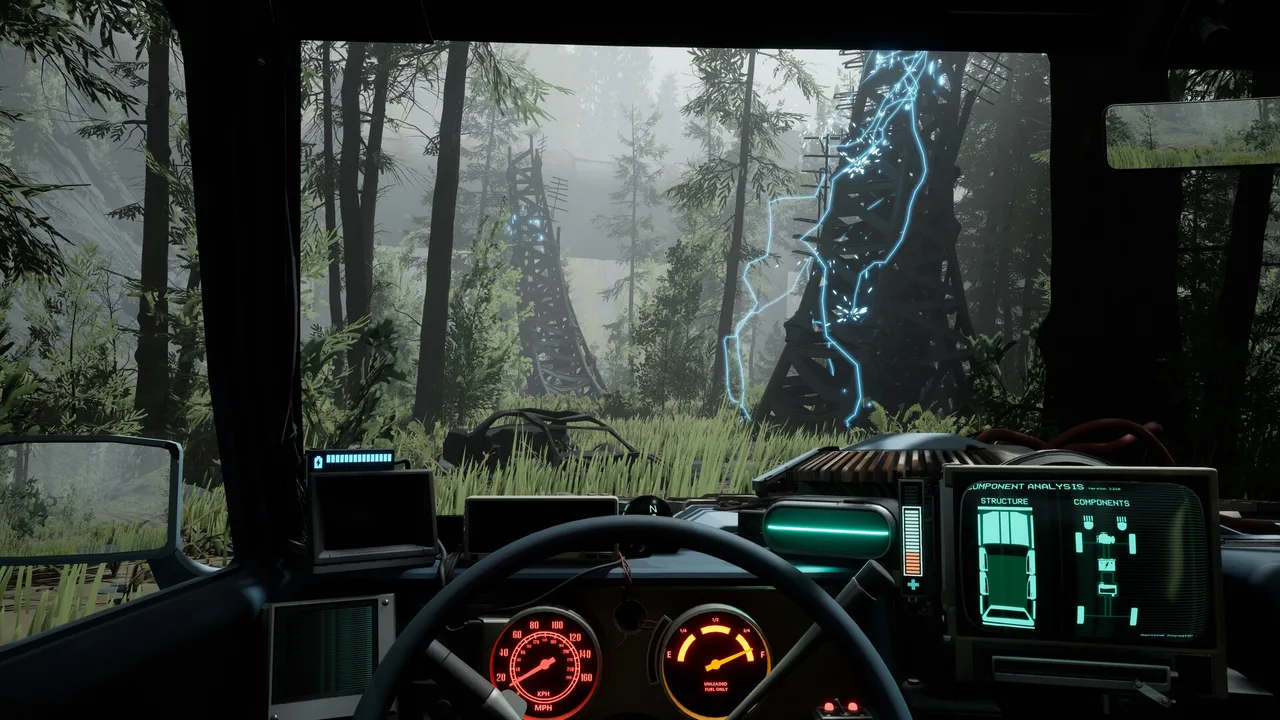


Last week, Google unleashed Project Genie upon the world. The generative AI tool is described a "general-purpose world model" capable otherwise of creating interactive environments.
The prototype web application is powered by Genie 3, Nano Banana Pro and Gemini. It can, in the words of Google, be used to sketch, explore, and remix "living" virtual worlds that have been produced via text or impact prompts.
Almost immediately, some people used Genie to churn out (legally-dubious) facsimiles of video game such as The Legend of Zelda: Breath of the Wild and Super Mario 64 (via The Verge). One person seemingly used it to create a dodgy imitation of Grand Theft Auto set in Greenland while proclaiming the end of video game studios is nigh (thanks, LadBible).
As reported by Reuters, it seems some investors shared that belief, with video game stocks sliding across the board after Google rolled out the tech.
Yet, when asked about the technology during a recent earnings call, Take-Two president Karl Slatoff stressed that tools like Genie cannot and should not be compared to traditional video game engines.
"Genie is early in its iteration at this point and trying to make a comparison to a game engine is just really—they're not even in the same ballpark. Genie is not a game engine," he added.
"[...] I think there will be a moment in time where that will become more defined. It certainly doesn't replace the creative process. And I would say, look, I mean, it looks to me more like a procedurally generated interactive video at this point. There are limitations and Google has said as much. So to compare the technologies, I think there's really no way to do that because they're so far apart."
"There are so many more elements to game development that go beyond world creation"
Even without accounting for the fact that Genie's virtual worlds crumble into digital sludge in seconds, Slatoff stressed what some people are evidently forgetting: there is more to a video game than a character gliding through an ramshackle environment cobbled together by tool that is only capable of replication as opposed to creation.
"There are so many more elements to game development that go beyond world creation. And the question is what is the world creation? So even beyond world creation, there's everything else that's involved," continued Slatoff.
"There's the storyline, there's emotional connection, there's vibe, there's mission structure. All of those things you cannot capture through AI and certainly not through a world builder. So that's just a very, very small component of what we do. And if this tool bears out, it will make a component of what we do all that much better and more efficient."
Take-Two itself has been vocal about its support of generative AI tools, with CEO Strauss Zelnick explaining the company is "actively embracing" the technology to "drive efficiencies" and "reduce costs."
That isn't changing any time soon.
Speaking to investors during the company's latest earnings call, Zelnick said he hopes that generative AI will one day become a creative force.
"Just a reminder, our strategy has three parts: be the most creative, be the most innovative and be the most efficient company in the entertainment business. And generative AI squarely falls within the category of innovation and is already moving into the category of efficiency," said Zelnick.
"I'm hopeful that it will also move into the category of creativity as it allows our creators to use digital tools to expand what we do to make it even more beautiful and even more engaging and even more exciting."